
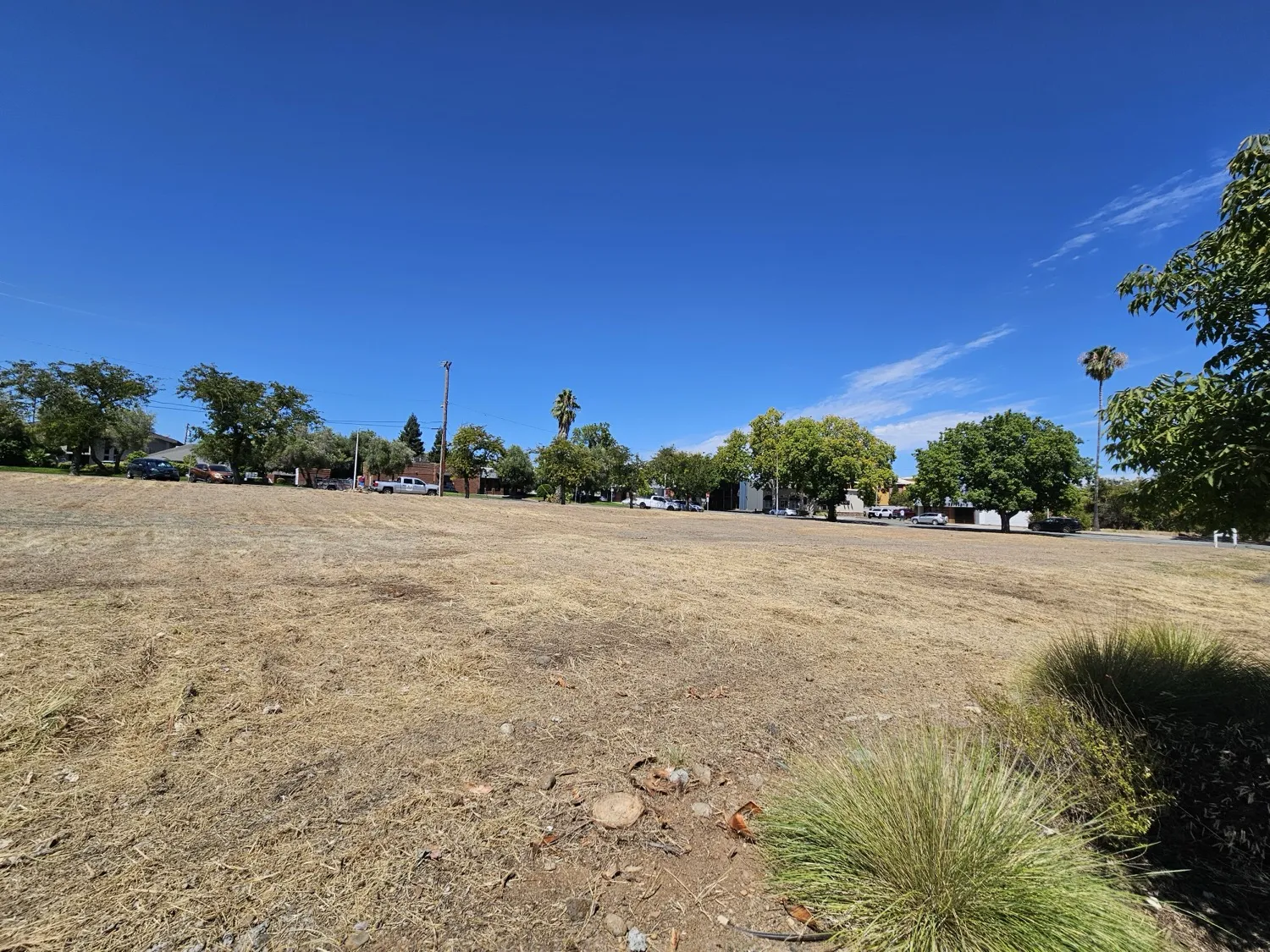
What should you do about a weed abatement notice in Redding?
Act before the date on the order. Redding has no annual mow-by deadline; your compliance order sets your deadline, penalties accrue after it, and once the city moves to abate, you can be billed the full procedure cost even if you clear the lot yourself late. Call the enforcing department, confirm the date, and get the ground cut to standard with dated photos.
That is the short version. The long version is worth five minutes, because Redding’s system works differently than most owners assume, and the differences are where the money is. We cut notice-response jobs on priority scheduling for commercial properties and residential lots alike, and the documentation we hand you is built for exactly this file. The service itself is described on our weed abatement page.
Who sent your notice, and why does it matter?
In Redding, enforcement is split. Hazardous vegetation on vacant lots, greenbelts and private property belongs to the Redding Fire Department, (530) 225-4141. Overgrown and dead vegetation as a property maintenance and blight issue belongs to Code Enforcement in Development Services, (530) 245-7110. Outside city limits, it is the Shasta County Fire Warden under the county’s defensible space ordinance. Anderson runs its own complaint-driven program.
The department on the letterhead tells you which standard applies and who to call about the deadline. Call them first. Then call a crew.
What is the actual standard you have to meet?
There is no single number, and that surprises people who own parcels in more than one jurisdiction:
| Jurisdiction | Vegetation standard | Where it comes from |
|---|---|---|
| City of Redding | No inch measurement. Growth “capable of being ignited and endangering property” must be cut and removed | Fire code adopted by the city; weeds broadly defined, including brush like manzanita and chaparral |
| Unincorporated Shasta County | Weeds and annual grasses kept to 4 inches or less; stumps to 8 inches; parcels of 2 acres or less treated across the entire parcel | County Code Chapter 8.10, adopted September 2025 |
| City of Anderson | Lawn is overgrown when 50 percent or more exceeds 12 inches; 30-day notice standard | Anderson Municipal Code |
Note what Redding’s version means in practice: the standard is the enforcing officer’s judgment about fire and safety hazard, not a tape measure. The city does publish a 4-inch mowing target as defensible space guidance around structures, which is a sensible bar to cut to. But you cannot argue a vacant lot into compliance at 5 inches, because no inch number exists to argue.
What actually happens if you ignore it?
Redding’s process is administrative and it compounds:
- A compliance order arrives stating what to fix and when penalties start accruing.
- Miss it, and a hearing gets set. Not showing up legally counts as admitting the violation.
- Penalties accrue daily until an officer confirms the fix. Each day is separately chargeable as a misdemeanor, and civil penalties can reach $1,000 per violation.
- The city or its contractor clears the parcel. Here is the clause owners never see coming: once it reaches this stage, the city can bill you its abatement costs even if you rush out and clear the lot yourself before the crew arrives.
- The bill is not a flat fee. It is the full cost of the procedure: investigation, staff time, hearings, notices, title reports, the contractor, lien filing, plus interest.
- Unpaid, it becomes a lien with the force and priority of a judgment lien, or a special assessment collected with your property taxes.
The county’s track is faster on the front end: notices can allow as few as five calendar days to start voluntary abatement, and costs can be specially assessed against the parcel. One more Redding wrinkle: neighbors within 500 feet of a nuisance property can sue the owner directly for damages, fees and up to $500.
Why do commercial and vacant parcels get hit hardest?
Because the enforcement hooks are written for them. Redding names vacant lots explicitly in its hazardous vegetation program. The county ordinance applies to parcels “whether improved or unimproved,” requires whole-parcel treatment at 2 acres and under, and counts adjacent parcels under the same ownership as one parcel. And an owner cannot contract the duty away: Redding’s code holds the owner responsible regardless of any agreement with a tenant or property manager.
For a portfolio owner, that means one standard in the county, another in Anderson, and officer discretion in Redding, all attaching personally to you. The economics of just keeping parcels cut are covered in what overgrown lot cleanup costs, and they beat one forced abatement by a wide margin.
How fast can the ground be cut, and what should you keep?
Notice-response work gets priority scheduling with us: call or text (530) 238-5077 with the deadline and the parcel address, and we walk it, quote it in writing, and cut it to the standard. You get dated before-and-after photos, which is the documentation that closes an enforcement file, plus a COI if your vendor file needs one.
Then decide whether you ever want the letter again. A standing cut before fire season, sized to the parcel, is how owners around here stay off the inspection list entirely. That schedule logic lives in when to clear brush in Northern California, and for held land and business grounds, our commercial property clearing page covers recurring service.
Call or text (530) 238-5077. Free written estimates anywhere within 50 miles of Redding.