
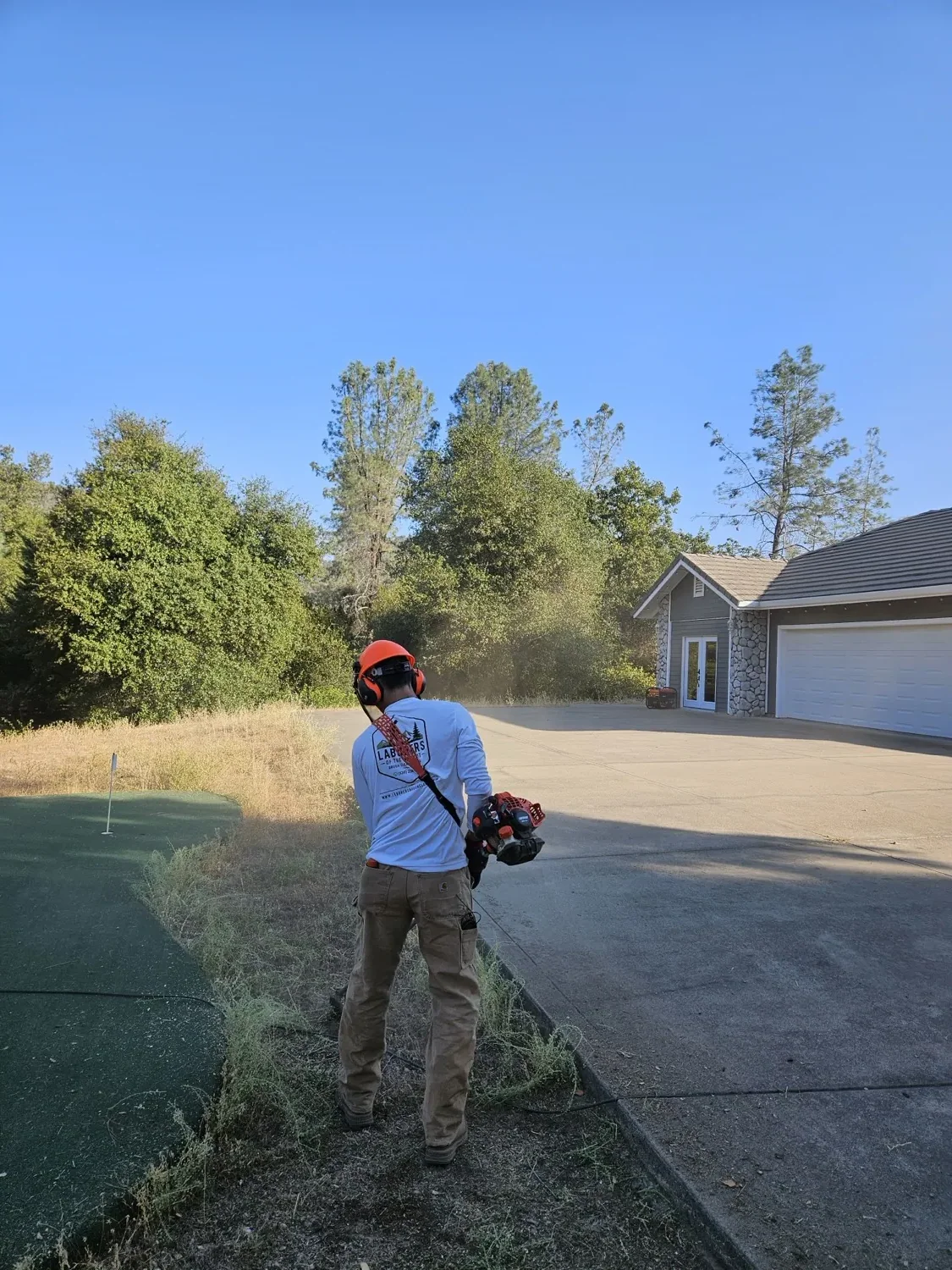
When is the best time to clear brush in Northern California?
Late spring is the best window for grass and weeds around Redding: May into early June, as the green grass cures. The city’s own wildfire plan tells owners to mow and weed-eat “in late spring as green grasses cure.” Woody brush, blackberry and burn piles belong to late fall and winter, when heat, spark risk and nesting birds are out of the picture.
That is the two-sentence answer. The full calendar is worth knowing because Redding’s climate is extreme, the rules change with the seasons, and cutting at the wrong time can mean doing the same work twice. Whatever the month, if the growth is already a hazard, brush clearing now beats a perfect date later.
What does the clearing year look like around Redding?
Redding averages 33.5 inches of rain a year, and two thirds of it falls December through March. July averages 99.9 degrees with 0.07 inches of rain. The calendar writes itself around those two facts: winter grows the fuel, summer cures it.
| Season | Best work | Why |
|---|---|---|
| Late spring (May to early June) | Annual grass, weeds, starthistle, vacant lots | Grass has finished growing and starts to cure; cut once, cut late, and it stays down for the season |
| Summer (July and August) | Priority hazard work, morning hours | Peak fire season; equipment spark rules apply; heat limits crew hours |
| Early fall (September and October) | Regrowth touch-ups, ladder fuels | Still hot and dry; north winds make these the wind-driven fire months |
| Late fall to winter (November to February) | Woody brush, blackberry, fence lines, burn piles | Burn season runs November 1 to April 30; cool weather, soft ground, no nesting conflicts |
| Early spring (March and April) | Finish woody work, last burns, pre-growth prep | Last burn windows; get ahead of the grass crop the rain just built |
Why is late spring the sweet spot for grass?
Because of how annual grasses and starthistle grow. The wet season builds a grass crop that stays green through April, then cures into standing fuel by early summer. Cut too early and the plant regrows on spring moisture, so you pay for a second pass. Cut as it cures and the job holds through fire season.
Yellow starthistle proves the point. University of California weed research says the best time to mow it is early flowering, just as the yellow blooms appear. Mow earlier and it regrows fast on the light you just gave it. That early-bloom window around here lands in late spring, right beside the grass-curing window.
What changes about summer work?
The rules and the risk. State law requires a spark arrester on any engine-driven tool working on grass, brush or forest-covered land, and that includes trimmers and mowers. Fire agencies push hot work to the morning hours. On federal ground near Redding, the land office cuts off engine-powered saw work at 1 p.m. daily in summer.
We keep cutting all summer, because defensible space in July is still better than none. The difference is method and timing: morning starts, string heads over blades near rock, water and a shovel on site. A hand crew has one more summer advantage, which is that it does not drag steel across rocky ground at 100 degrees. More on that trade in hand crew vs machine clearing. Late summer is also the one window where pond and shoreline work hits hardest, for reasons covered in our pond weed control guide.
Why do fall and winter suit woody brush?
Three reasons. First, the plants are done growing: blackberry canes finish their season’s run and chamise stops extending in summer drought, so a winter cut is not chasing regrowth. Second, burning becomes legal again: Redding’s burn season for dry vegetation runs November 1 to April 30, on permissive burn days, with the full permit system in our Shasta County burn permit guide. Third, the nesting window is closed. State wildlife guidance treats roughly February 1 through September 1 as bird nesting season, and active nests are protected year-round. Work before February avoids the issue entirely.
Winter is also when the schedule opens. June callers wait behind the fire-season scramble. November callers pick their week. If your property needs the same work every year, a standing vegetation management schedule fixes the timing question permanently.
How do you keep it from coming back?
You do not stop regrowth in one pass. Federal fire-effects research shows chamise resprouts from its root crown within about six weeks of being cut, in any season, and Himalayan blackberry regrows from deep root crowns with canes that can run over 20 feet in a single year. What kills woody regrowth is repetition: cut after the plant spends its spring reserves, cut the regrowth, repeat. Starthistle answers to timing instead, one well-placed cut at early bloom.
That is the honest case for a schedule over a rescue. The first cut is the expensive one. Keeping ground clear costs a fraction of clearing it again from shoulder height, which is the math covered in what brush clearing costs per acre.
Get on the calendar before the scramble
The cheapest month to book clearing is the one before everyone else calls. Walk the ground with us now, get a written scope, and pick the window that fits the work: grass before it cures, woody brush when the ground is cool.
Call or text (530) 238-5077 for a free written estimate anywhere within 50 miles of Redding.