
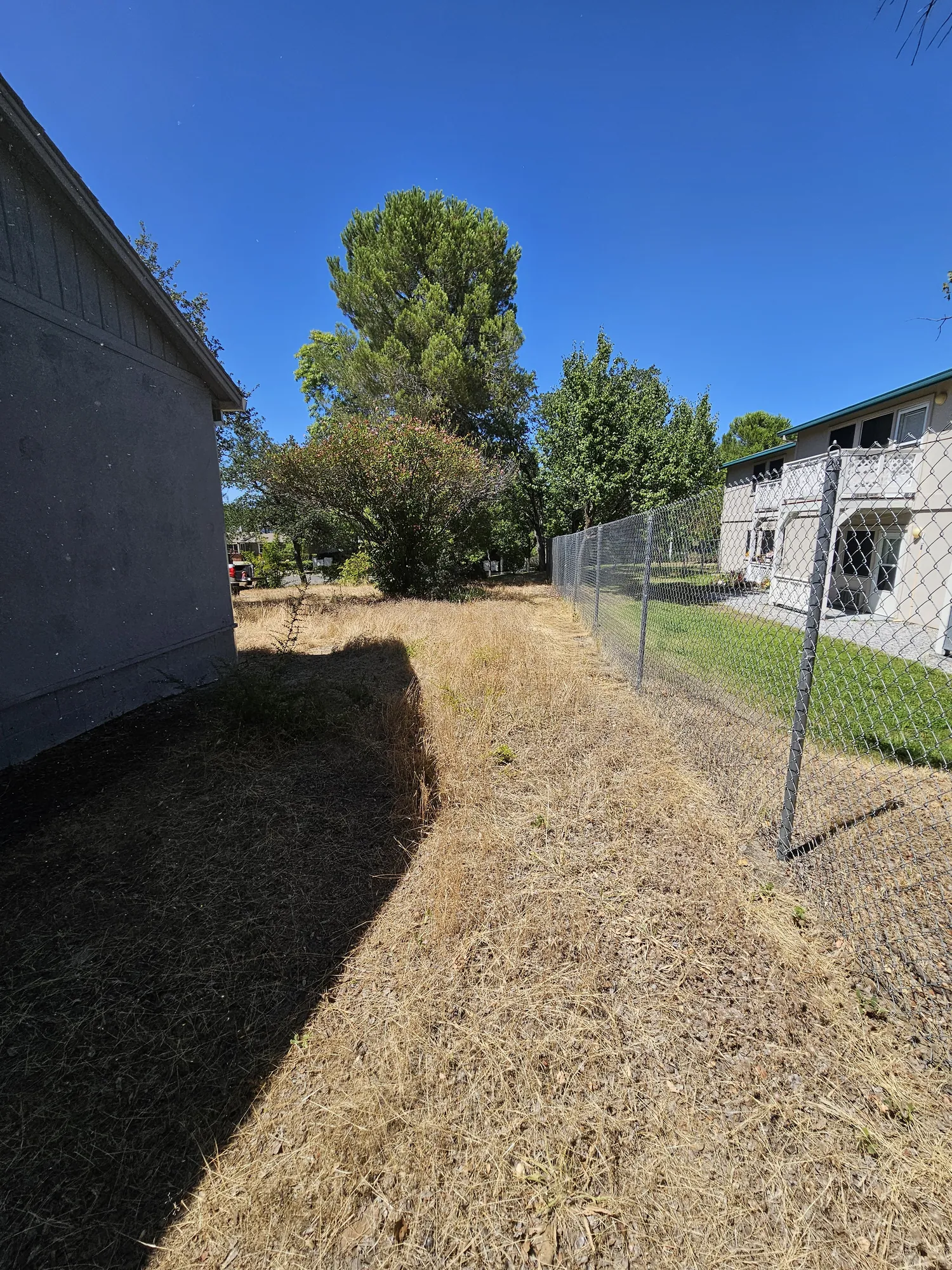
Fence Line Clearing
Grass and brush cut off your fence lines, driveways and road edges — clean corridors you can walk, maintain and see down.
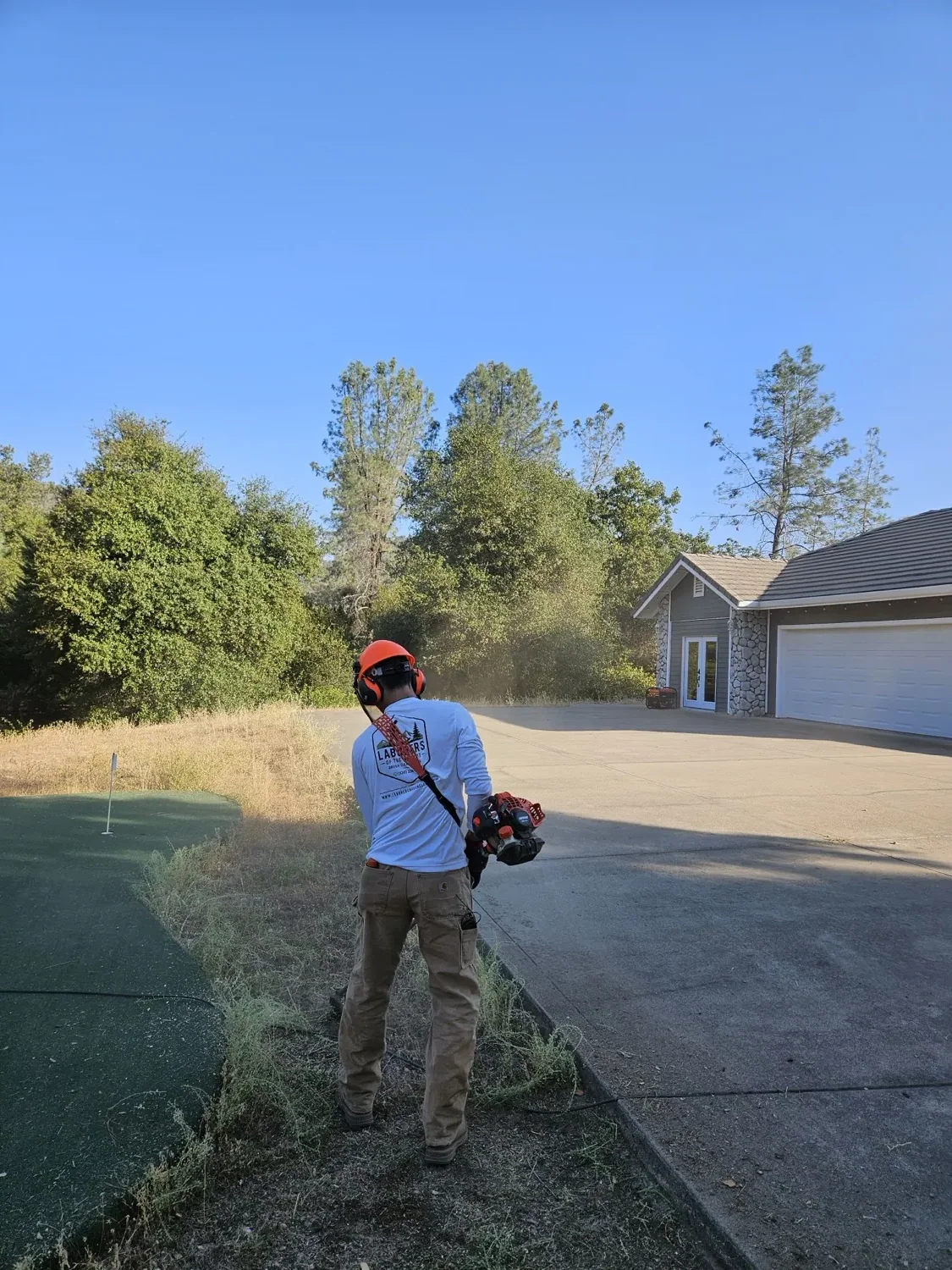
Poison oak and blackberry removal around Redding is hand work, and it takes the right gear to do it safely. Both plants take over the ground you actually use: creek banks, fence lines, oak understory, the edges of a rural yard. Our crew cuts them to ground level with brush cutters and rakes the canes and stems out. We detail around the keeper trees, fence posts and structures you want left alone. Before-and-after photos come with every job, and the second half of the payment is not due until the work is done to your satisfaction.
Neither plant dies from one cut. Poison oak suckers from underground stems, and a blackberry crown lives on after its canes are gone. We scope the first clearing to open the ground, then set a cut schedule that keeps the regrowth down. That is how a fence line or an oak understory stays open through a season. The written estimate documents the acreage and the linear footage, so you can hold the finished work against the paper. If the goal is the 100-foot clearance around a home, start with our defensible space work.
Tell us about your property — we’ll get right back to you.
Poison oak grows through Shasta County oak woodland two ways: a low shrub in full sun and a vine that climbs the trunks in shade. UC IPM notes that the urushiol oil sits in the stems, roots, leaves and the skin of the fruit. It is still there in winter when the stems are bare, which is how people get caught on their own land. Our crew works it in full protective gear, including washable cotton gloves over plastic gloves, the way UC IPM recommends. We cut the stems to ground level with brush cutters and rake the material out clean, then detail around the oaks you want kept.
We never burn what we cut. UC IPM is direct about it: burning poison oak creates a serious health hazard, because the oils disperse in the smoke particles. Cut material stays potent too, since detached and dried brush can still cause dermatitis. So it gets bagged and staged out of the way, or loaded by the trailer-load for haul-off, handled per the city's disposal rules. Haul-off is scoped in the written estimate before the crew starts, so the debris plan is settled up front. Poison oak suckers from underground stems, so the first clearing sets up a schedule rather than ending the job.
Himalayan blackberry is rated High on the Cal-IPC invasive plant inventory, and the reason shows up on the ground. UC IPM reports that one plant covers a very large area over time, because the cane tips root down and start daughter plants. That is how a thicket walks along a fence line and down a creek bank. The canes live about two years, but the crown underneath them persists after they die. We cut the canes to ground level with blade heads, which go through hefty brush about two fingers thick. If the fencing itself is buried and you want the whole run opened, that is our fence line and roadside clearing.
Timing decides how well a cut holds. UC IPM says mowing does poorly unless it is performed repeatedly through the growing season. Pulling the crowns works best in moist soil in early spring or late fall, because a dry-soil pull snaps the stem and the plant resprouts. So the plan is usually a hard first cut, then repeat passes while the ground is still working. Published cost guides put brush removal at about $800 to $3,000 per acre (HomeGuide, 2026), so we price from the ground rather than over the phone. Read what brush clearing costs per acre in California for the breakdown. The walk-through and the written estimate are free.
Scotch broom carries the same High rating from Cal-IPC, which also notes that it increases risk for wildland fires. Its seedbank can stay dormant in the soil for up to 80 years, so one clearing is never the end of that stand. Spanish broom shows up on the same ground. Yellow starthistle is rated High as well and has invaded over 12 million acres in California. UC IPM calls it a long-lived winter annual and says the best time to mow is the early flowering stage, just as the yellow blooms appear. Horses should never be allowed to eat it, because it causes the neurological disease known as chewing disease.
We cut broom low and take starthistle at the early flowering stage. Tree of heaven suckers and the other invasive brush on the edges get cut with it. Fence lines, creek banks and the property boundary are where this work usually lives, along with the brushy strip behind a barn or a shop. We do it around Redding and across Shasta County, in Palo Cedro, Cottonwood, Happy Valley and Millville. This is a veteran-owned company, insured with $1 million in general liability, and a certificate of insurance is available on request. Call or text (530) 238-5077 and we will usually get eyes on the ground within days.
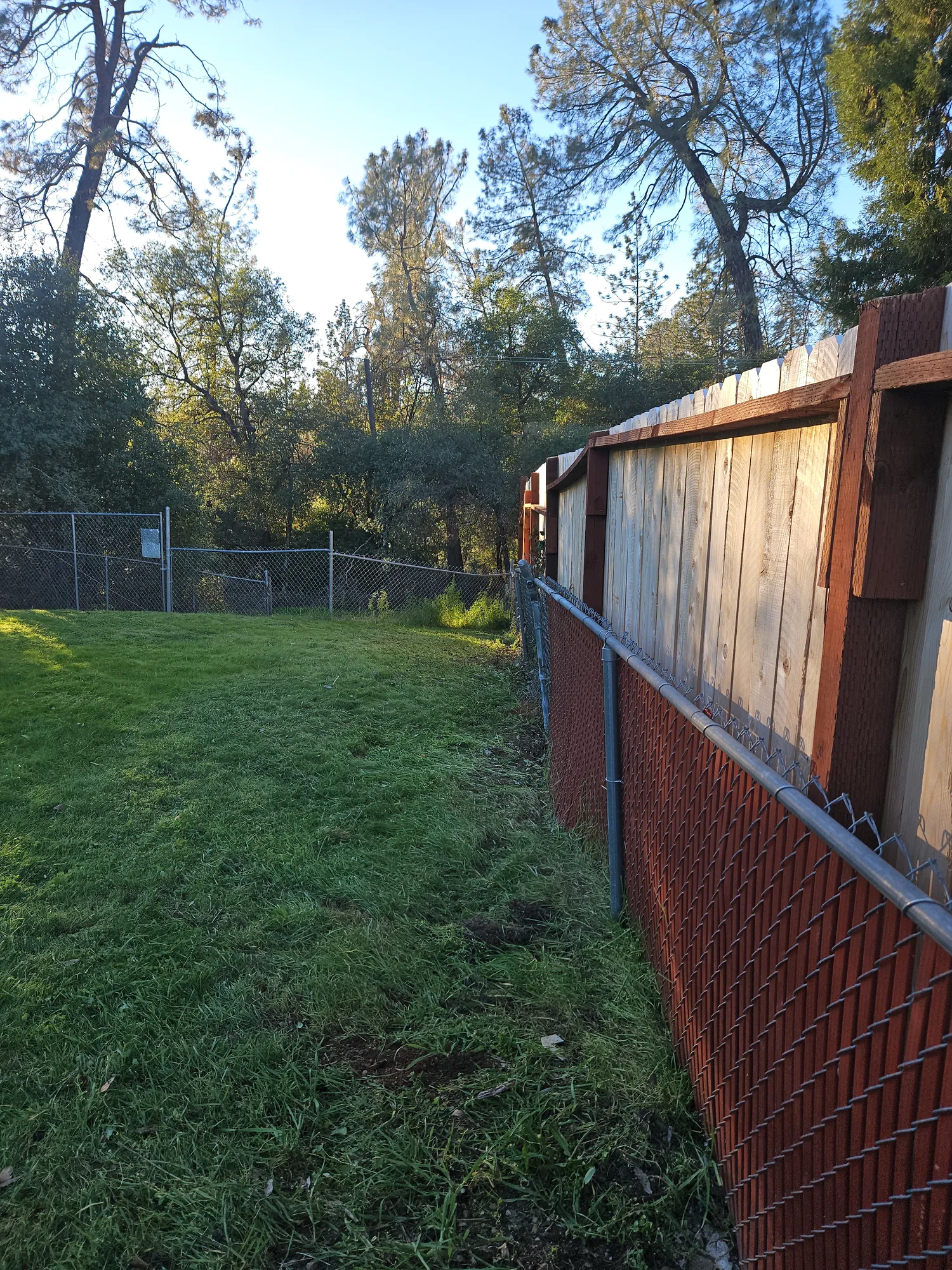
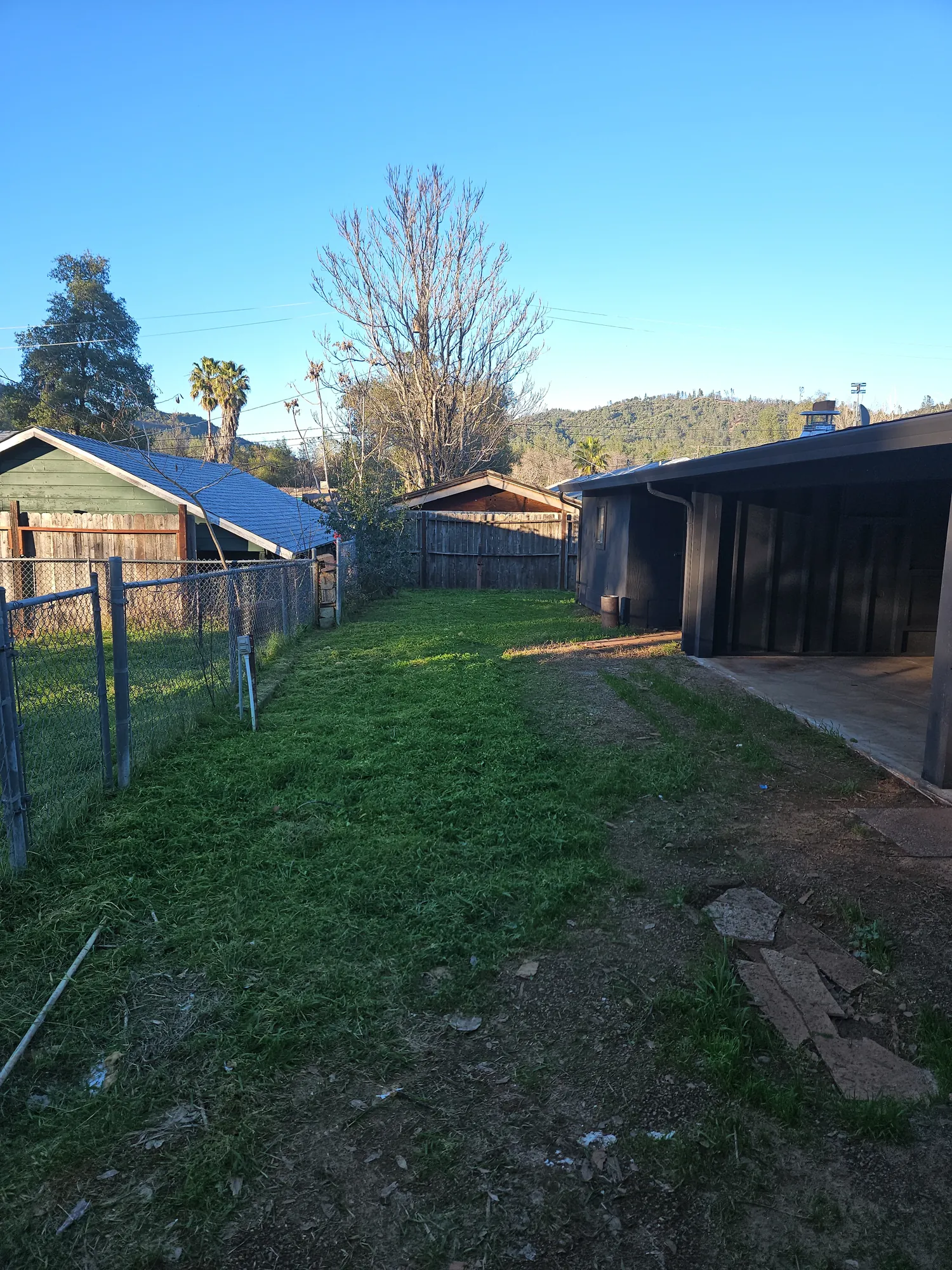
Free, no-obligation estimates across Shasta County and surrounding areas within ~50 miles of Redding.
(530) 238-5077From the first walk of the property to the final one, here is exactly how it goes.
We come out and walk the property with you: what is growing, where the fire risk lives, what the terrain demands, and what you want the ground to become.
You get a free written estimate with the acreage and linear footage documented and the debris handling defined. The number holds unless the scope changes - no surprises, no scope creep.
The crew shows up when scheduled, in uniform, and cuts to the scope - on any terrain a boot can reach. Anything unexpected, you hear about immediately, not on the invoice.
We walk the finished ground with you against the written scope, with before-and-after photos documented. The second half of payment is not due until the work is done to your satisfaction.
Common questions about poison oak & blackberry across Shasta County and surrounding areas within ~50 miles of Redding. Don't see yours? Give us a call — we're happy to help.
Grass and brush cut off your fence lines, driveways and road edges — clean corridors you can walk, maintain and see down.
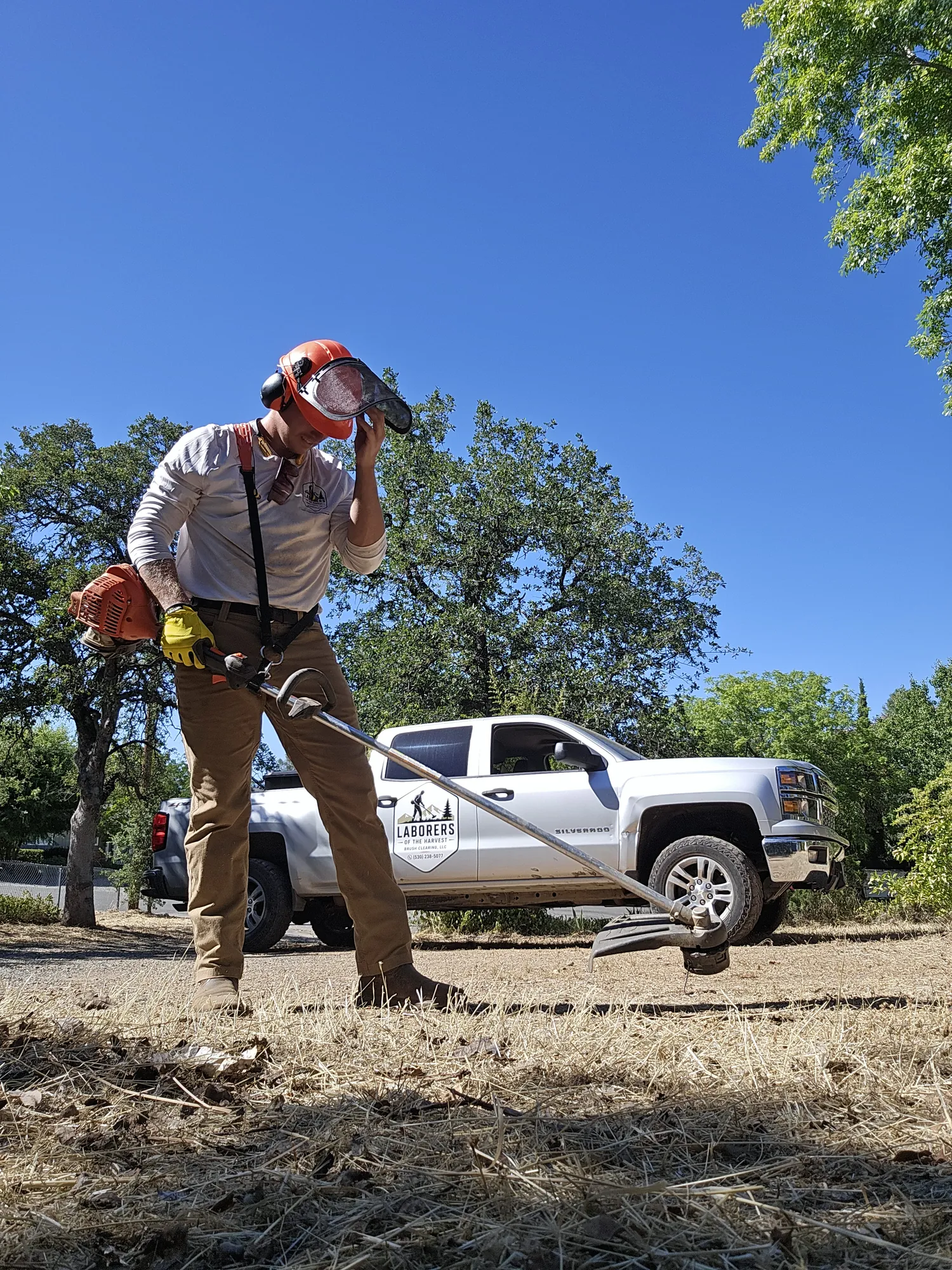
Overgrown brush, tall dry grass and weeds cut down to clean, defensible ground — by a crew that works the terrain machines can’t touch.
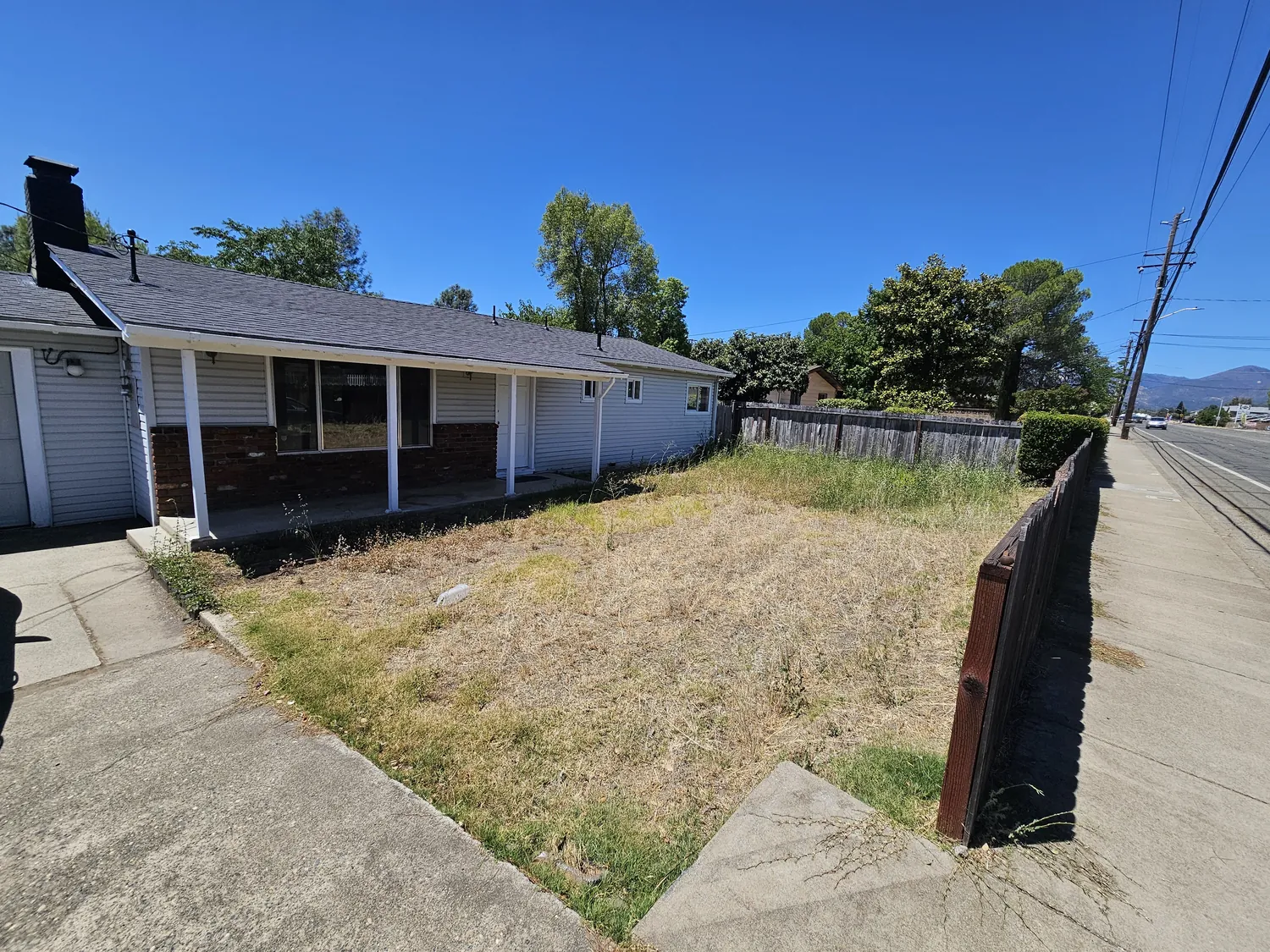
Your home’s first line of wildfire defense: vegetation cleared and maintained to the CAL FIRE 100-foot standard, by hand, right up to the structure.
Cattails, tules and bank overgrowth cut back by hand — your pond edge opened up without machinery tearing at the banks.
The owner is a U.S. Marine Corps veteran, and the company runs on it: show up on time, work to the written scope, leave the site clean, communicate straight. Mission-first, every job.
Steep banks, rocky slopes, tight side yards, ground against the house — the places overgrowth is worst are the places machines can't work. Our crew cuts anywhere a boot can reach.
Every estimate documents the acreage and linear footage, what gets cut, and what happens to the debris. The number holds unless the scope changes — no surprises, no scope creep.
Redding-based with $1M general liability, before-and-after photos on every job, and final payment only when the work is done to your satisfaction. A contractor you can put on file.
Overgrown lot, brush closing in on the house, fence lines gone to grass, or acreage that needs a real plan? Call or text — or send the form — and we will walk the property with you and hand you a free written estimate.
Tell us about your property — we’ll get right back to you.